For decades, the Body Mass Index (BMI) has been the gold standard for assessing whether a person is at a healthy weight. Doctors use it, insurance companies use it, and fitness apps love it. But recently, a new challenger has entered the ring: the Body Roundness Index (BRI).
While BMI tells you if your weight is “appropriate” for your height, BRI tells you if your shape is healthy. The difference is crucial. Let’s break down the science, the math, and which one actually matters for your health.
Your Body Mass Index (BMI) AND Body Roundness Index (BRI) Checker
🧬 BMI vs BRI All-in-One
📊 Your Body Metrics
BMI + BRIWhat is BMI?
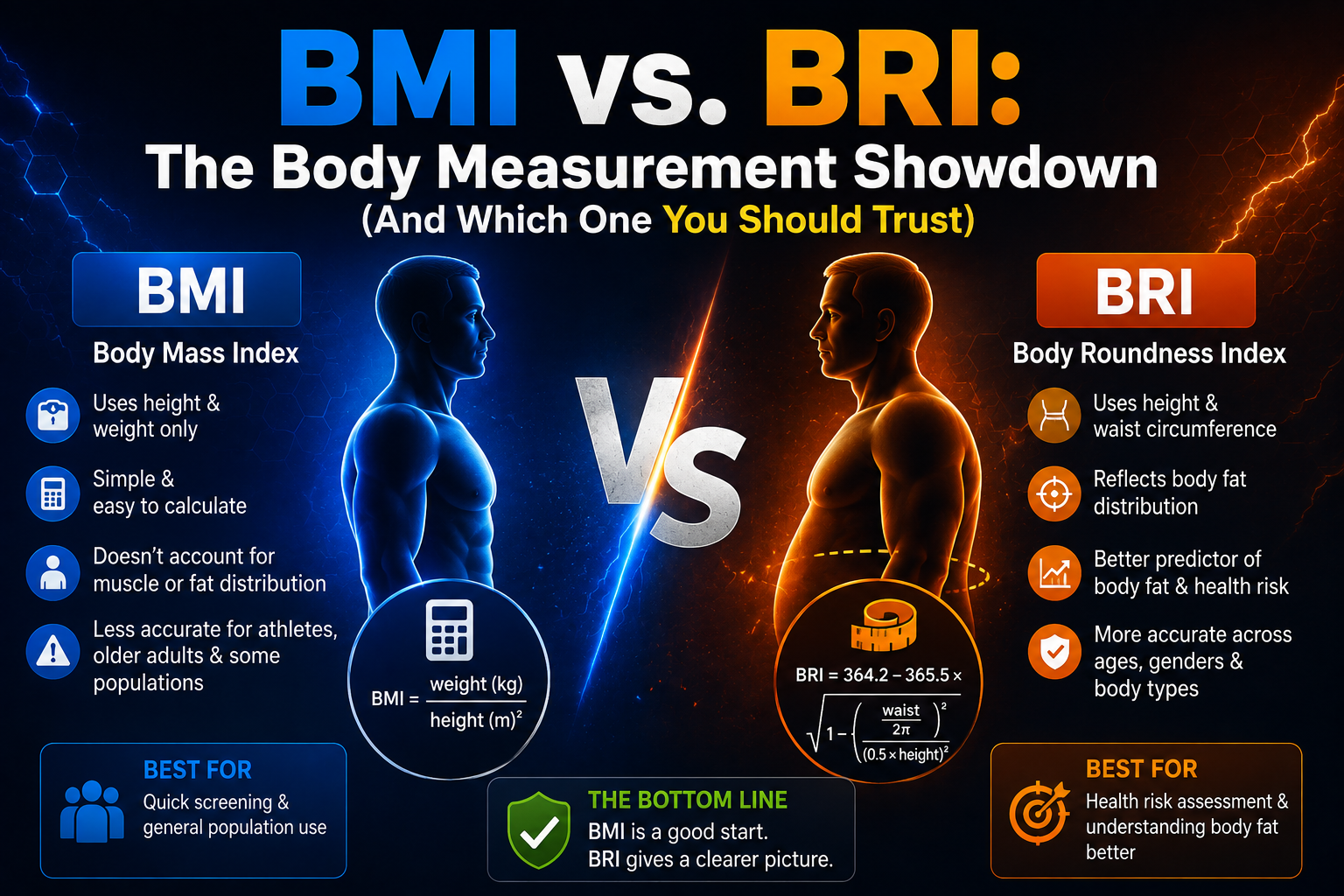
BMI is a simple calculation using your height and weight. It was invented in the 1830s by a Belgian mathematician (not a doctor!) to study population averages, not individual health.
The Formula:
BMI = weight (kg) / [height (m)]²
The Categories:
- Underweight: < 18.5
- Normal: 18.5 – 24.9
- Overweight: 25 – 29.9
- Obese: ≥ 30
The Problem with BMI
BMI is a “one-size-fits-all” measurement that fails miserably when applied to individuals.
- Muscle vs. Fat: A bodybuilder with 8% body fat can have a BMI of 31 (Obese) because muscle weighs more than fat.
- The “Skinny Fat” Trap: An older adult with very little muscle but a high belly fat percentage can have a “Normal” BMI of 22, yet they are metabolically unhealthy.
Enter BRI: The Game Changer
The Body Roundness Index (BRI) was developed in 2013 to fix BMI’s fatal flaw. Instead of just using height and weight, BRI uses height and waist circumference to measure how “round” your body is.
The Formula (Simplified):
BRI = 364.2 − 365.5 × √(1 − [waist (m) / (2π × height (m))]²)
(Don’t worry, we’ll code this below so you don’t have to do the math!)
The Categories (Generally):
- Low Risk: 1 – 3 (Lean, “Cucumber” shape)
- Moderate Risk: 3 – 5
- High Risk: > 5 (Round, “Apple” shape)
Why BRI is Better
BRI measures visceral fat—the dangerous fat that wraps around your internal organs. High visceral fat is directly linked to heart disease, type 2 diabetes, and metabolic syndrome. BRI gives you a score that basically tells you: “How close are you to being a perfect sphere?”
The Verdict: Who Wins?
| Feature | BMI | BRI |
|---|---|---|
| Measures | Weight relative to Height | Body Roundness / Visceral Fat |
| Inputs | Height, Weight | Height, Waist Circumference |
| Fails for | Athletes, Elderly, Pregnant Women | Short or Tall people (less accurate) |
| Health Indicator | Poor (Confuses fat/muscle) | Excellent (Directly links to disease risk) |
The Bottom Line: Stop obsessing over your BMI. If you want a true picture of your metabolic health, BRI is the superior metric. However, using both gives you the best overall context.