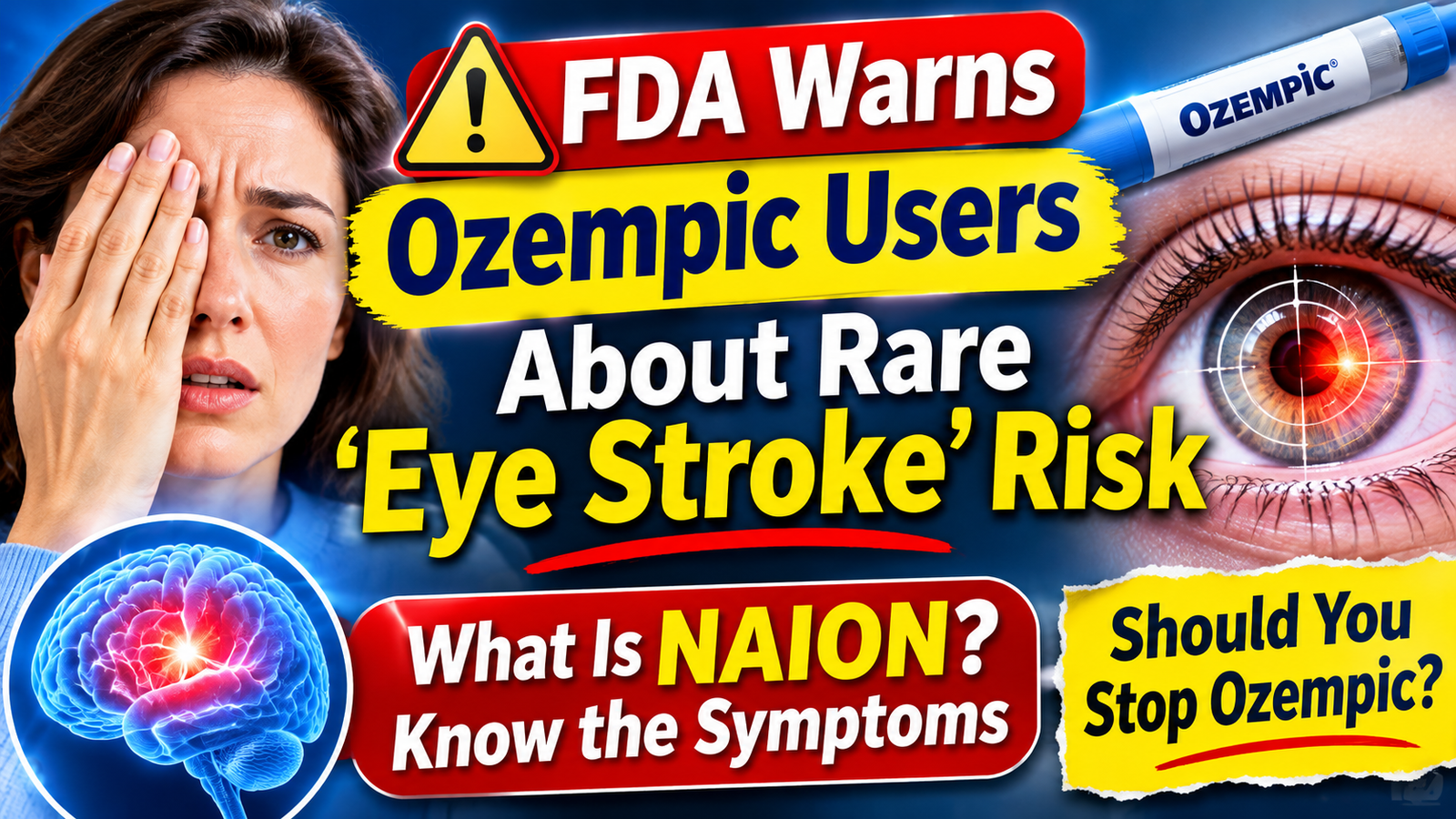
The US Food and Drug Administration (FDA) has ordered manufacturers of GLP-1 medications to update their safety labels to include a warning about a rare eye condition called non-arteritic anterior ischemic optic neuropathy (NAION). Sometimes described as an “eye stroke,” the condition can cause sudden, painless vision loss and may lead to permanent blindness.
The November 9, 2026, FDA announcement applies to GLP-1 medications used for type 2 diabetes and weight management, including Ozempic, Wegovy, Mounjaro and Zepbound.
What Is NAION or an Eye Stroke?
NAION occurs when blood flow to the optic nerve is reduced. The optic nerve carries visual information from the eye to the brain. When it does not receive sufficient blood supply, its tissues can become damaged, potentially resulting in permanent vision loss.
Unlike a conventional stroke affecting the brain, NAION damages the optic nerve. It usually affects one eye and can develop suddenly, sometimes when a person wakes up.
Does Ozempic Increase the Risk of NAION?
The FDA reviewed 126 randomized clinical trials involving 134,253 participants to investigate a possible connection between GLP-1 medications and NAION.
The analysis identified 15 probable cases:
- GLP-1 medication group: 6.4 cases per 100,000 person-years.
- Comparison group: 3.8 cases per 100,000 person-years.
This suggests a possible increase in risk, but the absolute number of cases was very small. The FDA also reviewed observational studies, which provided additional evidence of a potential association. However, scientists have not established that these medications directly cause NAION.
NAION Symptoms: Warning Signs GLP-1 Users Should Know
Watch for these symptoms, particularly if they develop suddenly in one eye:
- Sudden, painless loss of vision.
- Blurred or hazy vision.
- Blind spots or missing portions of the visual field.
- Distorted colour perception.
- Reduced central vision or visual sharpness.
People experiencing these symptoms should seek immediate medical attention and prompt evaluation by an ophthalmologist.
Should You Stop Taking Ozempic or Wegovy?
No. The FDA warning does not mean everyone should discontinue treatment. GLP-1 medications can provide important benefits for people managing obesity and type 2 diabetes.
Patients should not stop prescribed medication without consulting their healthcare professional. If NAION is diagnosed, the FDA advises clinicians to consider discontinuing the medication unless its benefits clearly outweigh the risks.
Risk factors for NAION include diabetes, high blood pressure, smoking, sleep apnea, anaemia and kidney disease.
The bottom line: NAION is rare but potentially serious. The new FDA warning highlights the importance of recognizing sudden vision changes and seeking immediate eye care rather than ignoring symptoms.
Medical disclaimer: This article is for educational purposes and does not replace professional medical advice.
Reference Article : USFDA