Why can some people keep eating fatty foods even after they have consumed enough calories? New research suggests part of the answer may lie in a tiny energy-regulating system inside the brain.
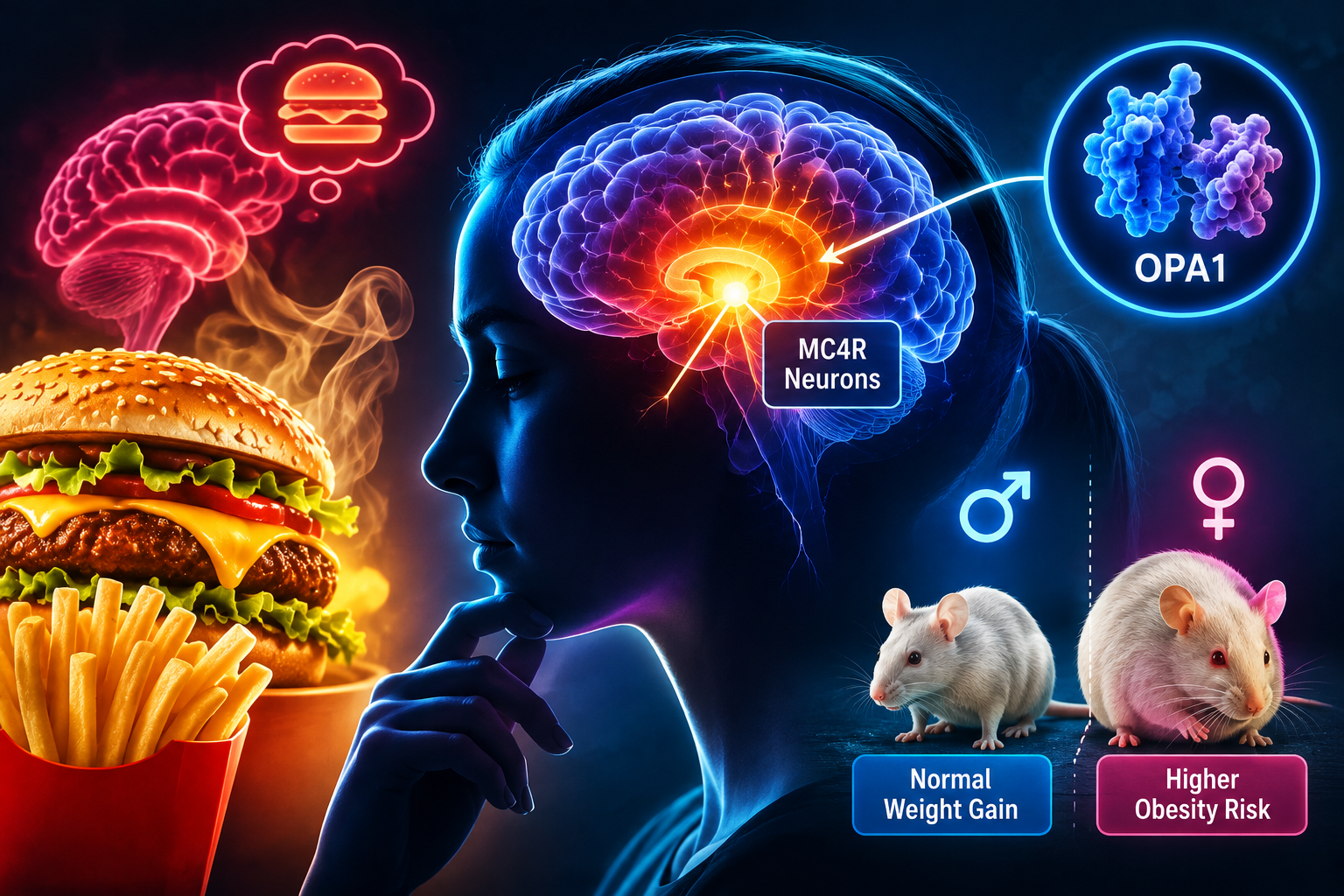
A 2026 study by researchers at Osaka Metropolitan University identified a potential role for a protein called OPA1 inside appetite-regulating MC4R neurons in the hypothalamus. The findings suggest that this protein may help the brain adapt to dietary fat and put a brake on excessive food intake.
A Brain “Brake” on Fat Intake?
MC4R neurons are already known to play an important role in controlling appetite and energy balance. The new study examined what happened when researchers removed OPA1, a protein important for mitochondrial function, specifically from these neurons in mice.
The result was striking: mice lacking OPA1 ate more and gradually developed obesity. When soybean oil was made freely available alongside their normal food, they consumed more of the oil and gained additional weight.
This does not mean soybean oil alone causes obesity in humans. Instead, the experiment suggests that OPA1 may be part of a neural mechanism that helps regulate the body’s response when dietary fat is readily available.
Male and Female Mice Responded Differently
One of the most interesting findings involved biological sex. Soybean oil increased OPA1 expression in the hypothalamus of male mice, but researchers did not observe the same response in females.
When OPA1 was missing from MC4R neurons, female mice developed a more pronounced obesity phenotype. They also showed a weaker appetite-suppressing response to the MC4R-targeting drug setmelanotide than female control mice. The same difference was not seen in males.
Could This Explain Why Obesity Treatment Varies?
Potentially—but it is too early to draw conclusions for humans. The research was conducted in mice, and the OPA1 mechanism must be studied further before it can be translated into obesity treatment.
Still, the findings add to growing evidence that obesity is not simply about “willpower.” Brain circuits, mitochondrial function, food availability and biological differences can all influence hunger and body weight.
Bottom Line
The study identifies OPA1 in hypothalamic MC4R neurons as a possible biological regulator of fat intake and weight gain. Its biggest message is that the brain may actively adapt to fatty-food exposure—and when part of that regulatory system fails, overeating can become easier.
Future research will need to determine whether a similar mechanism operates in humans and whether it could eventually help support more personalised obesity treatments.
Disclaimer: This article is for educational purposes only. This research was conducted in animals and should not be interpreted as proof that the same mechanism causes obesity in humans.