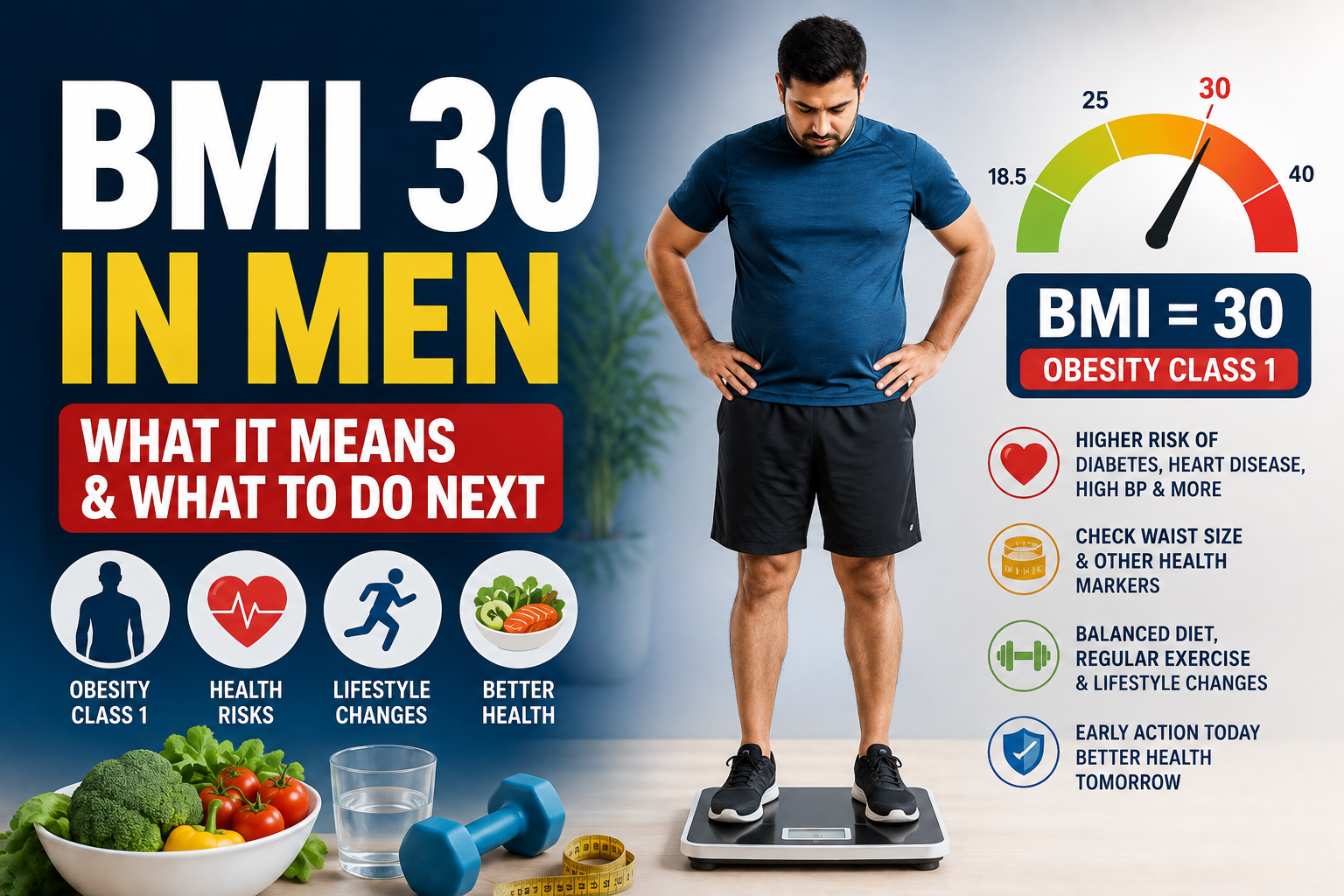
A BMI of 30 in a male is an important health marker. Under widely used adult BMI classifications, BMI 30.0 marks the beginning of obesity, specifically Class 1 obesity. It does not automatically mean a man is unhealthy, but it signals that a closer look at body fat distribution and metabolic health may be useful.
What Does BMI 30 Mean for a Man?
BMI is calculated as:
BMI = Weight (kg) ÷ Height² (m²)
For adult men, the standard categories are:
| BMI | Category |
|---|---|
| 18.5–24.9 | Healthy weight range |
| 25.0–29.9 | Overweight |
| 30.0–34.9 | Class 1 obesity |
| 35.0–39.9 | Class 2 obesity |
| 40+ | Class 3 obesity |
A BMI of 29.9 and 30.0 may look almost identical, but 30 crosses the classification threshold into obesity. BMI should still be treated as a screening measure, not a diagnosis or direct measurement of body fat.
Example: What Weight Is BMI 30?
The actual weight depends on height.
- 170 cm male: about 86.7 kg
- 175 cm male: about 91.9 kg
- 180 cm male: about 97.2 kg
- 185 cm male: about 102.7 kg
But two men with the same BMI can have very different health profiles. A muscular athlete and a sedentary person may both have a BMI of 30 while having very different amounts and distributions of body fat.
The Bigger Question: Where Is the Fat?
For a man with BMI 30, waist circumference and abdominal fat can add important context. Excess fat around the abdomen, including visceral fat surrounding internal organs, is associated with higher metabolic risk.
A more complete check can include:
- Waist circumference
- Waist-to-height ratio
- Blood pressure
- Blood glucose or HbA1c
- Triglycerides
- HDL cholesterol
- Physical activity and fitness
This matters because BMI alone cannot distinguish between muscle, subcutaneous fat and visceral fat. WHO also notes that waist circumference can provide additional information when assessing obesity.
What Are the Possible Health Risks?
As BMI and excess body fat rise, the likelihood of conditions such as type 2 diabetes, high blood pressure, cardiovascular disease, sleep apnea and fatty liver disease can increase. However, BMI 30 does not mean a person will definitely develop these conditions. Individual risk depends on genetics, fat distribution, age, fitness and other factors.
The 2026 Obesity Scenario: Why BMI 30 Matters More Than Ever
Obesity is now a major global health issue, with WHO reporting that more than 1 billion people are living with obesity worldwide. The conversation in 2026 is also changing rapidly: obesity is increasingly treated as a chronic health condition rather than simply a failure of willpower.
At the same time, treatment options are expanding beyond diet and exercise alone. The GLP-1 market is moving from injections toward oral medicines and more personalised treatment options. This week, Novo Nordisk began a late-stage study exploring the lowest effective maintenance dose of its oral Wegovy pill in adults with BMI 30 or higher, or BMI 27 with related health conditions.
What Should a Man With BMI 30 Do?
There is no need to panic over one number. A practical next step is to look beyond BMI and assess overall health.
Focus on:
BMI + waist size + blood markers + blood pressure + fitness + lifestyle habits.
Even moderate, sustained weight loss can improve health markers for many people. Depending on individual circumstances, management may involve nutrition changes, increased physical activity, behavioural support, anti-obesity medicines or other medical treatment.
Bottom Line
BMI 30 in a man means Class 1 obesity under standard adult BMI classification. It is a signal to assess your overall health—not a complete diagnosis by itself. In 2026, the obesity landscape is changing quickly, but the most useful starting point remains understanding your individual risk rather than focusing only on a single BMI number.
Medical Disclaimer: This article is for educational purposes only and does not replace medical advice. BMI is a screening tool and cannot directly measure body fat or visceral fat. Consult a qualified healthcare professional for personalised assessment.