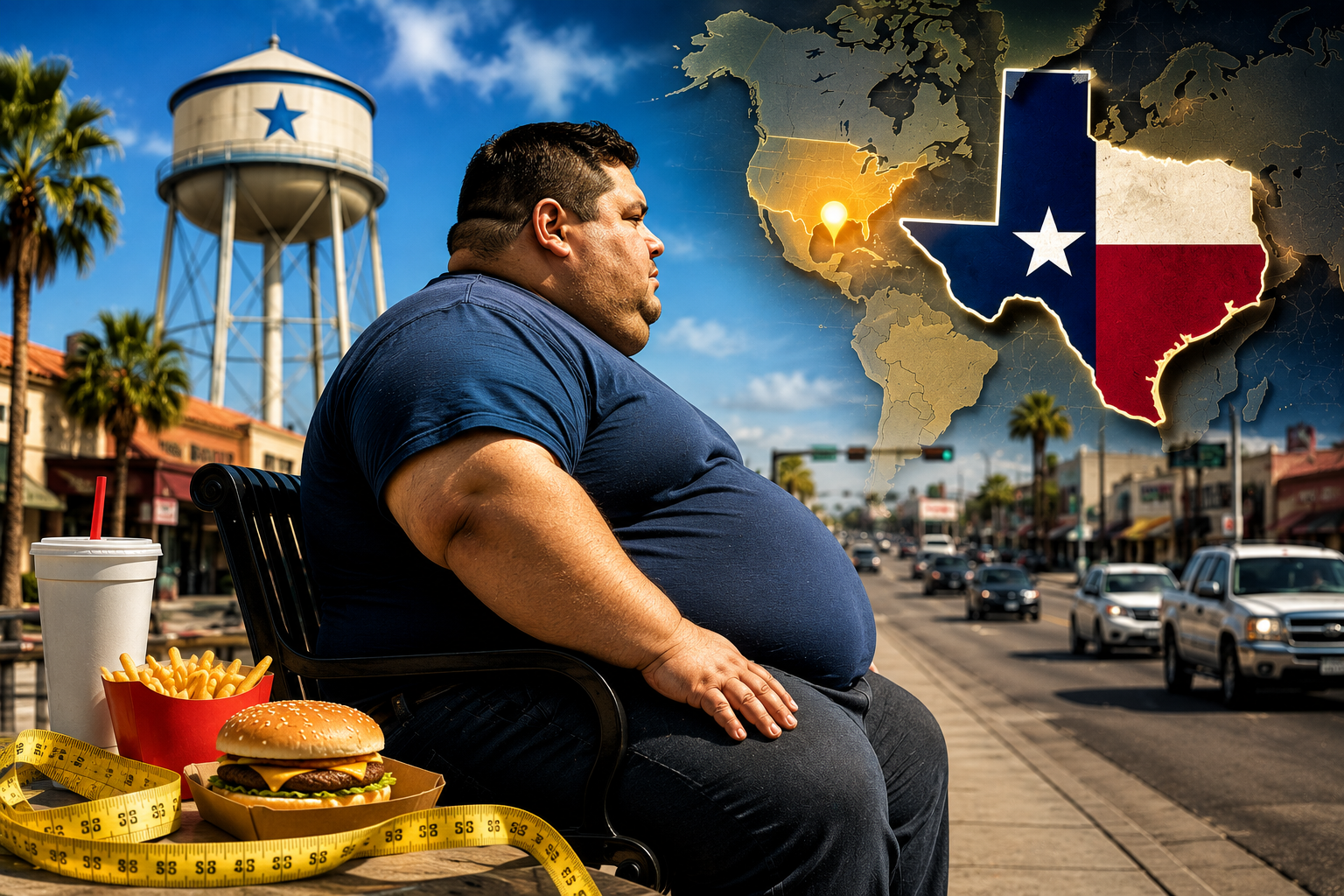
McAllen, Texas, in the Rio Grande Valley, has become a striking example of how obesity can be influenced by much more than individual food choices. The city has been documented in discussions of America’s severe obesity problem, with its high obesity rates linked to a combination of urban design, food access, income, culture and marketing.
The lesson extends beyond McAllen. Similar questions are being asked about cities such as Houston, San Antonio, Corpus Christi, Brownsville and El Paso, where car-dependent development, heat, food environments and socioeconomic conditions can influence physical activity and eating habits.
A City Built Around Cars
One of McAllen’s challenges is its infrastructure. Large parts of the city are designed primarily for cars, while sidewalks, safe crosswalks and bike lanes can be limited in some areas. When everyday destinations require driving, walking becomes less practical.
The climate adds another barrier. Summer temperatures can reach around 32°C (90°F) or higher, making outdoor activity uncomfortable. Parks may also be relatively far from residential neighborhoods.
City planning therefore matters for weight: when walking, cycling and convenient access to recreational spaces are difficult, people may naturally accumulate less daily physical activity.
Living in a Fast-Food Corridor
Food availability is another major factor. McAllen has been described as having more than 500 fast-food establishments for a population of roughly 150,000, creating an environment where calorie-dense, highly processed food can be extremely accessible.
When fast food is cheaper, quicker and easier to reach than healthier alternatives, the environment can influence eating behavior even when people understand the importance of nutrition.
Why Is Healthy Food So Expensive?
For lower-income households, food choices are also economic decisions. Fresh produce, lean proteins and other nutrient-dense foods can sometimes cost more upfront or require more preparation than processed alternatives.
Processed foods are often designed to be inexpensive, convenient, highly palatable and shelf-stable. When budgets are tight, these characteristics can make them attractive choices.
Culture can reinforce the pattern. In McAllen, influences from Mexican and American food traditions can intersect with large portions and the cultural idea that wasting food is inappropriate. Eating beyond comfortable fullness can therefore become normalized.
Marketing, particularly advertising aimed at children, can further establish preferences for sugary and ultra-processed foods early in life.
What Does Visceral Fat Do?
One of the most important consequences of excess calorie intake is the accumulation of visceral fat—fat stored around internal abdominal organs.
Unlike subcutaneous fat, which sits beneath the skin, visceral fat is metabolically active. Excess visceral fat is associated with insulin resistance, inflammation, abnormal blood lipids and higher risks of type 2 diabetes and cardiovascular disease.
Frequent consumption of foods high in added sugars and unhealthy fats can contribute to excessive calorie intake and metabolic stress. Over time, this can create a difficult cycle involving hunger, overeating, reduced activity and further weight gain.
For some people with severe obesity, mobility can eventually become so restricted that ordinary activities—including walking and exercising—become extremely difficult, reinforcing the cycle.
Obesity Is More Than Personal Choice
McAllen illustrates a broader point: obesity is influenced by the environment in which people live.
Urban planning determines how easy it is to move. Local economies influence what people can afford. Food businesses determine what is readily available, while culture and advertising influence what people consider normal.
That does not eliminate personal responsibility. But it shows why telling people simply to “eat less and exercise more” can overlook important barriers.
The challenge facing McAllen—and cities such as Houston, San Antonio, Brownsville, Corpus Christi and El Paso—is not only changing individual behavior. It is also creating environments where healthier choices become easier, more affordable and more convenient.
Medical disclaimer: This article is for educational purposes only and does not constitute medical advice. Obesity is a complex chronic condition influenced by biological, behavioral, environmental and socioeconomic factors. Individuals concerned about their weight or metabolic health should consult a qualified healthcare professional.